Counter-Strike 2 Rush Mode Guide: How to Win Every Round
Counter-Strike 2's new Rush Hour update adds a 3v3 mode with random arenas and a tight budget. Here's how to buy, hold towers, and win rounds.
Counter-Strike 2's Rush Hour update dropped a brand-new queued mode onto the Play menu, and it plays nothing like Competitive. Rush strips away the long buy rounds and five-on-five setups in favor of fast 3v3 skirmishes through a string of randomly picked arenas, and it punishes anyone who shows up with Premier habits and nothing else. Here's how the mode actually works, how to spend your money, and what else changed in the update that affects every queue you play — not just Rush.
01What Rush Changes About a Round of CS2
Rush is a queued 3v3 mode that sits next to Premier, Competitive and Wingman. Instead of one map for the whole match, each game sends both teams through a gauntlet of randomly selected battle arenas — Valve's own patch notes confirm the arena order is re-rolled every match, so you won't play the same sequence twice. Each arena has a tower in it, and winning a round means wiping the enemy team or holding that tower when the round timer runs out. Lose a round and you get pushed back toward your own castle; win one and you push the fight toward theirs, so a Rush match plays out as a tug-of-war across several small maps rather than one 30-round grind on a single layout.
Dropping the team size to three immediately changes how useful individual roles are. There's no room for a dedicated AWPer who never touches the bomb site and no fifth player to rotate in as backup if an early duel goes wrong — every player on a Rush team needs to be able to hold an angle, push a flank and finish a trade. Budgets are tight and rounds move fast, which is the entire point. There's no slow-building economy strategy to lean on here — every purchase has to earn its cost back inside a single short round, and hesitating to peek a corner usually just burns the clock until the enemy team claims the tower by default.
02Buying Smart on a Rush Budget
Because the mode is 3v3 with a capped budget per round, a single bad buy round can lose you the match outright — there isn't enough time left in the clock to grind your economy back the way you could in a 24-round Premier half. A few buying patterns hold up arena after arena:
- Hold the tower with sustained fire. Anything with a big magazine and controllable spray is good for denying the capture point once you're already inside it, since you're often fighting off two directions at once in a space this small.
- Take open sightlines with a rifle or a scoped weapon. Several arenas have long lanes leading to the tower, and whoever controls that lane controls the pace of the round — a rifle that can one-tap at range buys your teammates time to rotate.
- Keep an SMG or pistol round in reserve for a fast push. When the tower is contested and time is short, you need something cheap enough to buy every round that still lets you close distance quickly without burning your whole budget.
- Don't overspend on round one. You don't know which arena you're getting next, and Rush's tight budget resets are unforgiving if you go broke chasing a round you were already going to lose because of a bad arena draw.
The update's economy changes apply here too: the setting controlling total grenade purchases now caps the overall number of grenades a player can buy in a round rather than limiting each grenade type separately, so don't plan a round around stacking four flashbangs for one tower rush — you'll run out of budget for the grenades that actually win you the fight.
03Reading the Arena Gauntlet
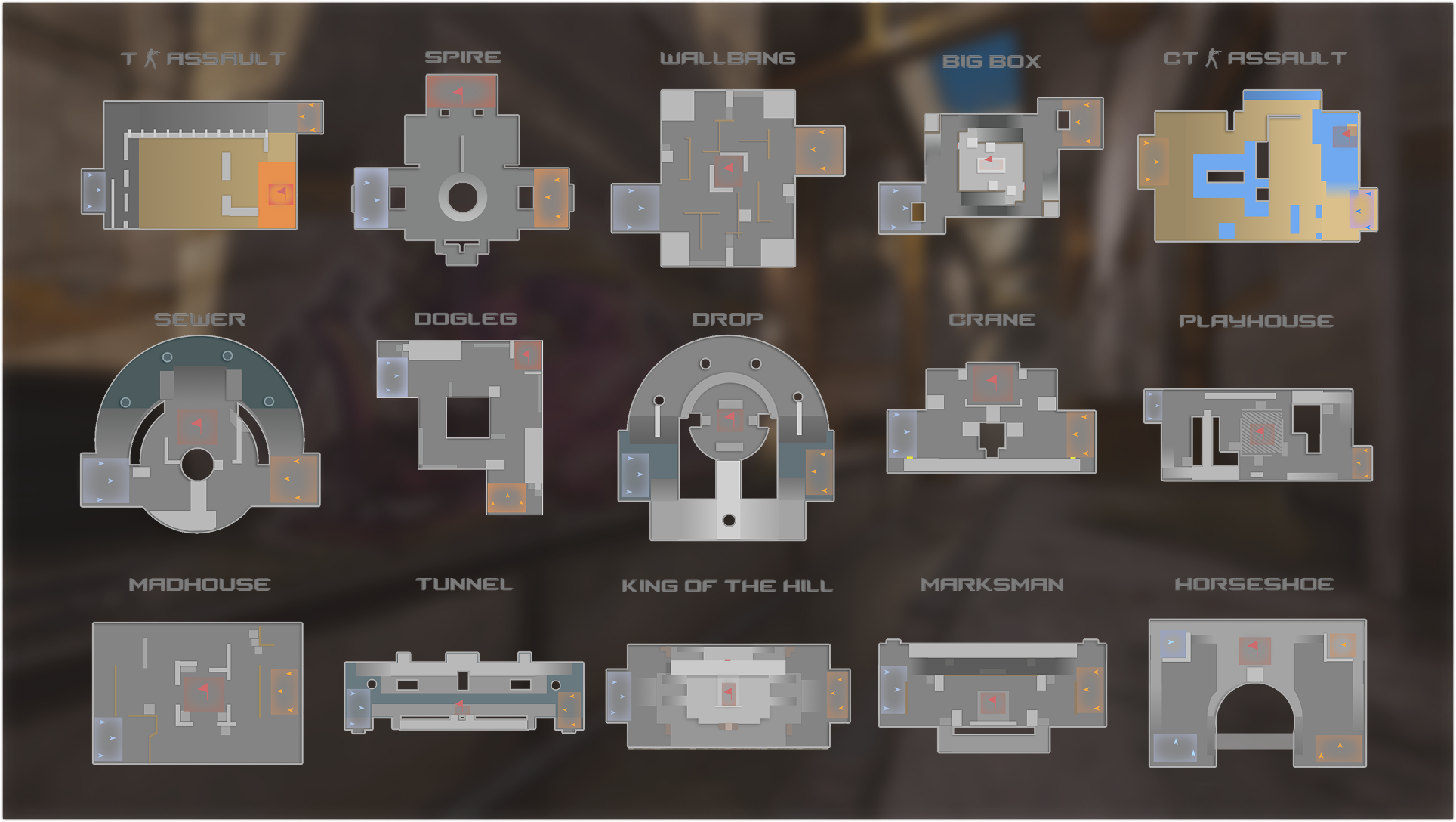
Every Rush arena ends in a castle, and the match is over when one team's run of wins pushes all the way to the enemy's final castle. Because the sequence is random, you can't memorize a single map the way Premier players learn Mirage or Ancient — you're learning the shared vocabulary of these smaller spaces instead: which lanes favor an AWP, which towers have blind spots on the capture point, and where the choke points sit relative to each team's spawn. Treat your first few losses in a new arena as scouting rather than wasted rounds. The arena pool keeps rotating back across a session, so remembering one tower's sightlines will matter again the next time that layout comes up in your queue.
If you're playing with two friends instead of solo-queuing into Rush, call out which teammate holds the tower and which one plays the flank before the round even starts. Three-player coordination breaks down fast in a round this short if everyone pushes the same angle at once, and there's no time to course-correct mid-round the way you could in a full five-on-five. Use the round's warmup seconds, not the round itself, to agree on the plan.
04Common Mistakes That Lose Rush Rounds
Most losses in Rush come down to habits carried over from longer modes rather than mechanical skill. Peeking slowly to clear an angle the way you would on a 115-second Premier round just gives the other team time to flank the tower while you're still clearing a corner. Buying a full kit every round regardless of what you actually won or lost leaves you broke for the round that matters. And treating the first arena like it's the whole match is a trap — a loss on arena one only pushes you one castle closer to your own base, it doesn't end anything, so there's no reason to force a bad trade just to avoid losing the opening round.
The flip side also costs matches: playing too passively. Because rounds are short and budgets are capped, sitting back and holding an angle without ever contesting the tower just lets the clock run out in the enemy's favor if they already hold it. Rush rewards committing to a plan early and adjusting fast, not turtling.
05The Rest of Rush Hour: Changes That Affect Every Mode
Rush is the headline feature, but Valve's Rush Hour update changed baseline CS2 mechanics that matter whether you're queuing Rush, Wingman or Premier:
- Silent reload. Press and hold the reload key and your weapon reloads without the usual sound, at the cost of a noticeably longer reload animation. Use it when you're holding an angle and don't want to give away that you're empty; don't use it when you need your gun back fast, since a loud reload is still quicker.
- Silent unscoping. Backing out of a sniper scope no longer makes noise, which removes a tell that AWPers used to give away after every shot — useful for repositioning after a pick without announcing where you're moving to.
- Premier map selection changed from bans to picks. Instead of banning maps down to one, Team 1 picks a map, Team 2 picks two, Team 1 picks a final map, and one of those four is chosen at random to start the match — Valve's stated goal is letting teams actually play maps they've practiced instead of just eliminating the ones they haven't.
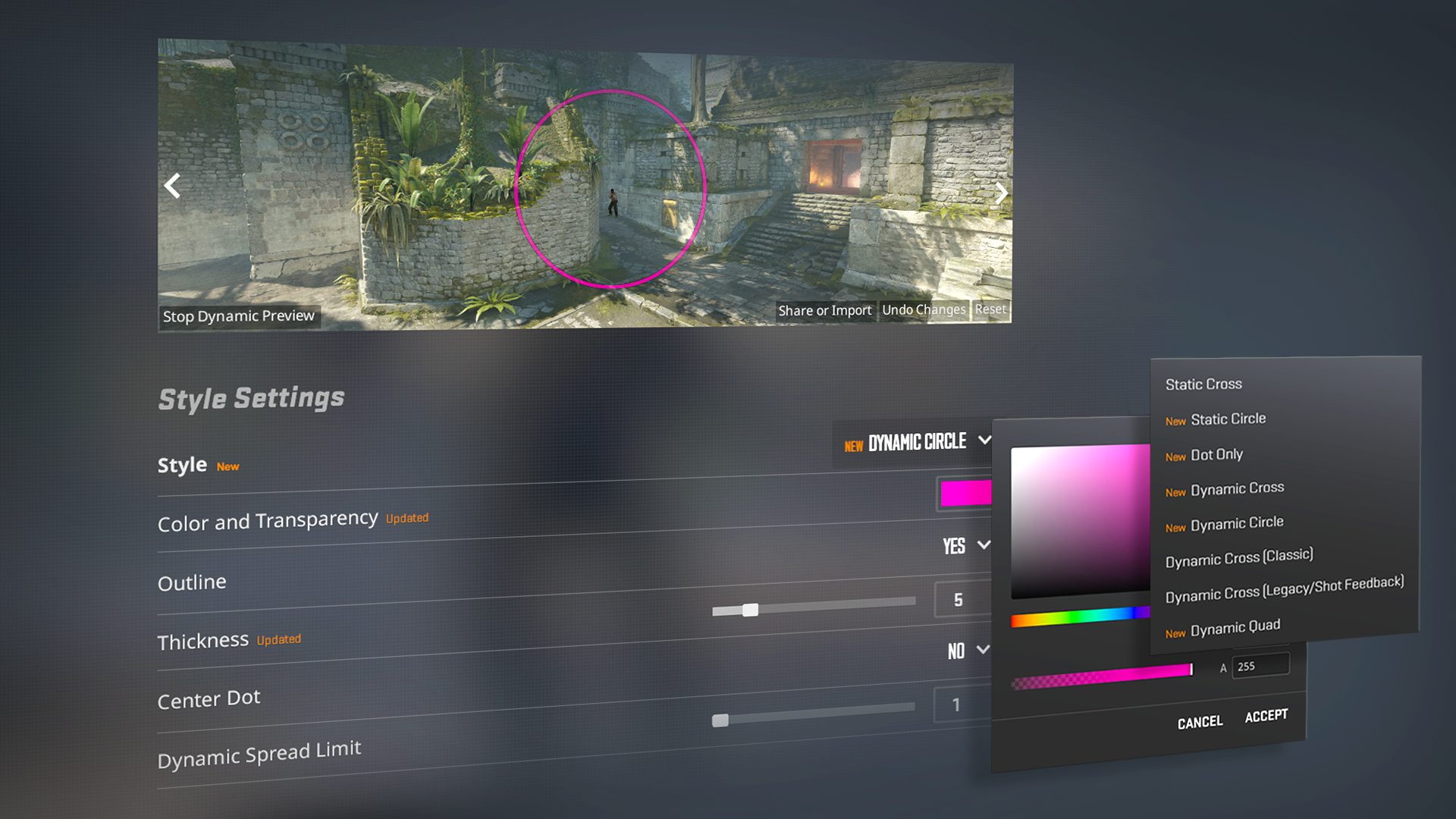
- Crosshair settings were reworked to be resolution-independent under a new Crosshair/Scopes settings tab, with new styles and a "Dynamic Quad" default that better reflects your weapon's real spread and inaccuracy.
- Clan Tags are back, pulled from your Steam Community Groups and shown next to your name wherever you play.
None of these are Rush-exclusive, so if you've been away from CS2 since before September 22, expect your reload sound and your Premier map-pick screen to look different the next time you queue up — whichever mode you pick.
06Should You Be Playing Rush?
Rush is built for players who want a CS2 fix without the time commitment of a full Premier match — rounds last under a minute and matches rarely run long, which also makes it a good warm-up before a longer session. If you're grinding toward a specific Premier rank, Rush won't move that number, but if you're trying to sharpen raw aim and fast decision-making without memorizing executes on the full competitive map pool, it's a legitimate way to spend queue time while the arena pool is still fresh. Keep an eye on Valve's own patch notes for Rush specifically, since the mode has already had multiple post-launch passes fixing clipping and geometry issues inside its arenas.
How to Win Your First Rush Matches
- 1Rush sits alongside Premier, Competitive and Wingman in the Play menu as its own queued 3v3 mode — pick it like you would any other mode.Before your first match
- 2Use the opening seconds to spot the tower's entrances and any long sightlines before picking a buy — you can't memorize a fixed map in Rush, so treat every new arena as live scouting.Round 1
- 3Spend on a weapon that fits the arena's sightlines (a rifle for open lanes, an SMG for close rushes) instead of maxing out armor and grenades every round.Each round
- 4Decide as a team whether you're defending the tower or rushing it within the first few seconds — Rush's short clock punishes indecision more than a wrong call.Each round
- 5Hold the reload key to reload without sound when you're camped on a position, but take the louder, faster reload when you need your gun back immediately.Mid-round
- 6Remember that a loss only pushes you one arena back, not out of the match — don't force a bad trade on an early round just to avoid falling behind.Throughout the match
- 7The same pool of arenas resurfaces across sessions, so note which towers favor long-range holds and which favor fast pushes for next time.After the match
FAQ
What is Rush in Counter-Strike 2?
Rush is a queued 3v3 mode added in CS2's Rush Hour update. Teams fight through a series of randomly selected battle arenas, each centered on a tower, and the match ends when one team's round wins push all the way to the enemy's final castle.
How is Rush different from Wingman?
Wingman is a 2v2 mode built around a single bomb site on dedicated small maps. Rush is 3v3, spans a sequence of multiple arenas per match instead of one map, and is won by eliminating the enemy team or holding a tower rather than planting or defusing a bomb.
Does silent reload work in every CS2 mode, or just Rush?
Silent reload and silent sniper unscoping are global changes from the Rush Hour update — they work in Premier, Competitive and Wingman too, not just Rush.
Did the Rush Hour update change Premier's map selection?
Yes. Premier dropped its map-banning system; now Team 1 picks one map, Team 2 picks two, Team 1 picks a final map, and the game randomly selects one of those four to play.
When did the Rush Hour update release?
Valve shipped the Rush Hour update, including Rush mode, on September 22, 2026.
Official resources

Jonas runs the guides desk at Tutorial.Games. He replays every route, build and boss strategy on the current patch before it goes up, and re-checks it when the developer ships a balance update. Soulslikes, co-op action games and anything with a build planner.