Star Wars: Galactic Racer Beginner's Guide: Vehicles and Runs
Star Wars: Galactic Racer's vehicle classes, overheat meter and run-based structure explained, with a step-by-step plan for your first tour.
Star Wars: Galactic Racer is out now on PC, PlayStation 5 and Xbox Series X|S, and it is not the straightforward arcade podracing game its marketing makes it look like at first glance. Developer Fuse Games, a studio founded by Criterion and Need for Speed veterans, built a runs-based racer in the Burnout mold, then wrapped it around a roguelite structure where a single bad lap can end your entire tour of the underground Galactic League. If you just bought in, here is everything worth knowing before your first race.
01What Kind of Racer Is This?
The campaign is set in the early years of the New Republic, after the Empire's fall, when a syndicate-run, unsanctioned circuit called the Galactic League springs up across the Outer Rim. You play Shade, a rookie pilot clawing up through a career campaign against rivals like reigning champion Kestar Bool, with Darius Pax, Hibi Esuufa and a returning Sebulba filling out the grid.
Structurally, each playthrough is a "tour": a run through a sequence of story chapters and races that ends either in victory at a boss race or in your pilot getting knocked out of the circuit for the season. Lose enough and the tour ends there; clear it and you bank meta-progression that carries into the next one. That roguelite skeleton is the single biggest thing separating this from a traditional racer, and it should shape how you play from race one, since a reckless win in chapter two can cost you the tour in chapter five if it burns through resources you needed later.
Outside the campaign, arcade events and scenario-style time trials let you jump into a single race or challenge without any of that run-based risk, which is a good place to learn a track or a vehicle class before committing it to a real tour. Up to twelve players can also race online, so once you have a build you trust, multiplayer is where to actually test it against people instead of the AI grid.
02Choosing Your First Vehicle Class
You start with access to standard speeders split across three handling profiles: landspeeders, speeder bikes and skim speeders. Fuse Games creative director Kieran Crimmins has talked about how deliberately the studio spread their strengths around rather than building one obviously-best option, describing a design goal where a tiny speeder bike cutting through a shortcut can still get overtaken by a skim speeder flying around the outside.
In practice: landspeeders like the Kor Sarun Darc X are the most forgiving all-rounders and a safe pick for your first few events while you are still learning how the overheat system punishes mistakes. Speeder bikes such as the Kor Sarun Ciza T are small enough to thread through shortcuts other classes cannot take, at the cost of fragility if you get caught in the open on a long straight. Skim speeders, including the Kor Sarun Rak S, trade some of that agility for raw top speed on wide tracks, rewarding players who are comfortable committing to a line early and holding it. None of the three is a trap pick, but each rewards a different reading of a track, so test all three across the early campaign chapters before committing to one for a full tour.
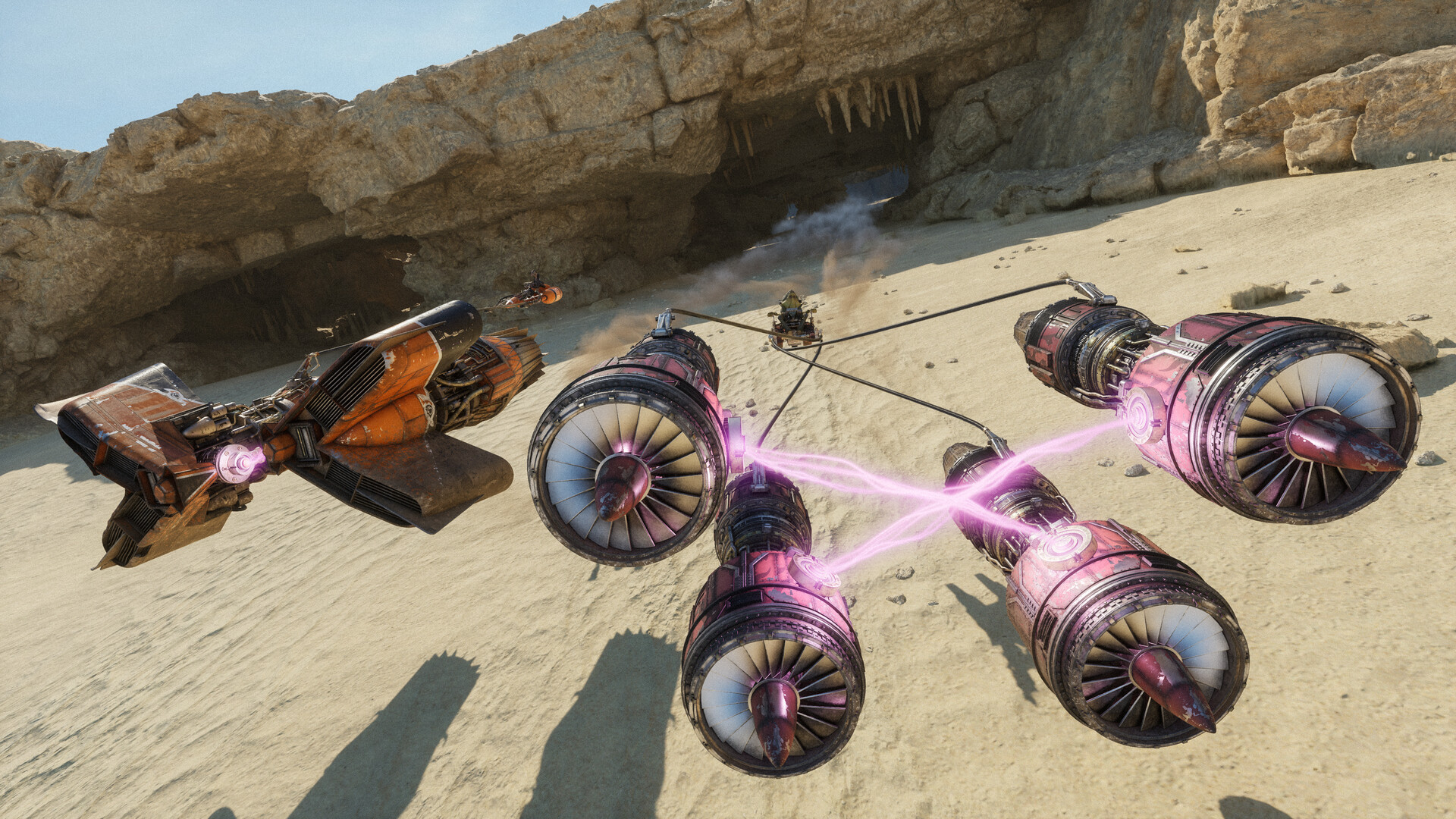
Podracers unlock later, after you clear several chapters, and Crimmins has been blunt that balancing them against the other classes was one of the hardest parts of development, to the point that pods effectively sit in their own tier rather than competing directly with speeders. They are noticeably looser to handle and somehow even faster than everything else in the game. Treat them as a reward for learning the base vehicle classes first, not a shortcut around learning them, because their handling will punish a player who has not already built good braking and boost habits.
03Reading the Overheat Meter
Every vehicle carries an afterburner that is the main tool for closing gaps and winning races, and it is also the main way you will lose them. Lean on the boost too long and your engine overheats; push past that point and your ride explodes outright, ending your race on the spot regardless of your position. The skill ceiling in Galactic Racer is largely about managing that meter rather than raw reflexes: short, timed bursts through straights and corner exits consistently beat holding the trigger down and hoping you cross the line before the engine gives out.
On top of that, races enforce a hard crash limit. Clip a wall or another racer too many times in one event and you are disqualified, which in a tour-based structure can end your run outright rather than just costing you one race. Different pilot loadouts lean into this differently: some favor an aggressive, boost-heavy approach that lives close to the overheat line, while others play a more defensive game that sacrifices top speed for consistency. Early on, prioritize finishing clean over finishing first; a cautious podium beats an aggressive DNF every time your tour is actually on the line.
04Surviving Planet Hazards
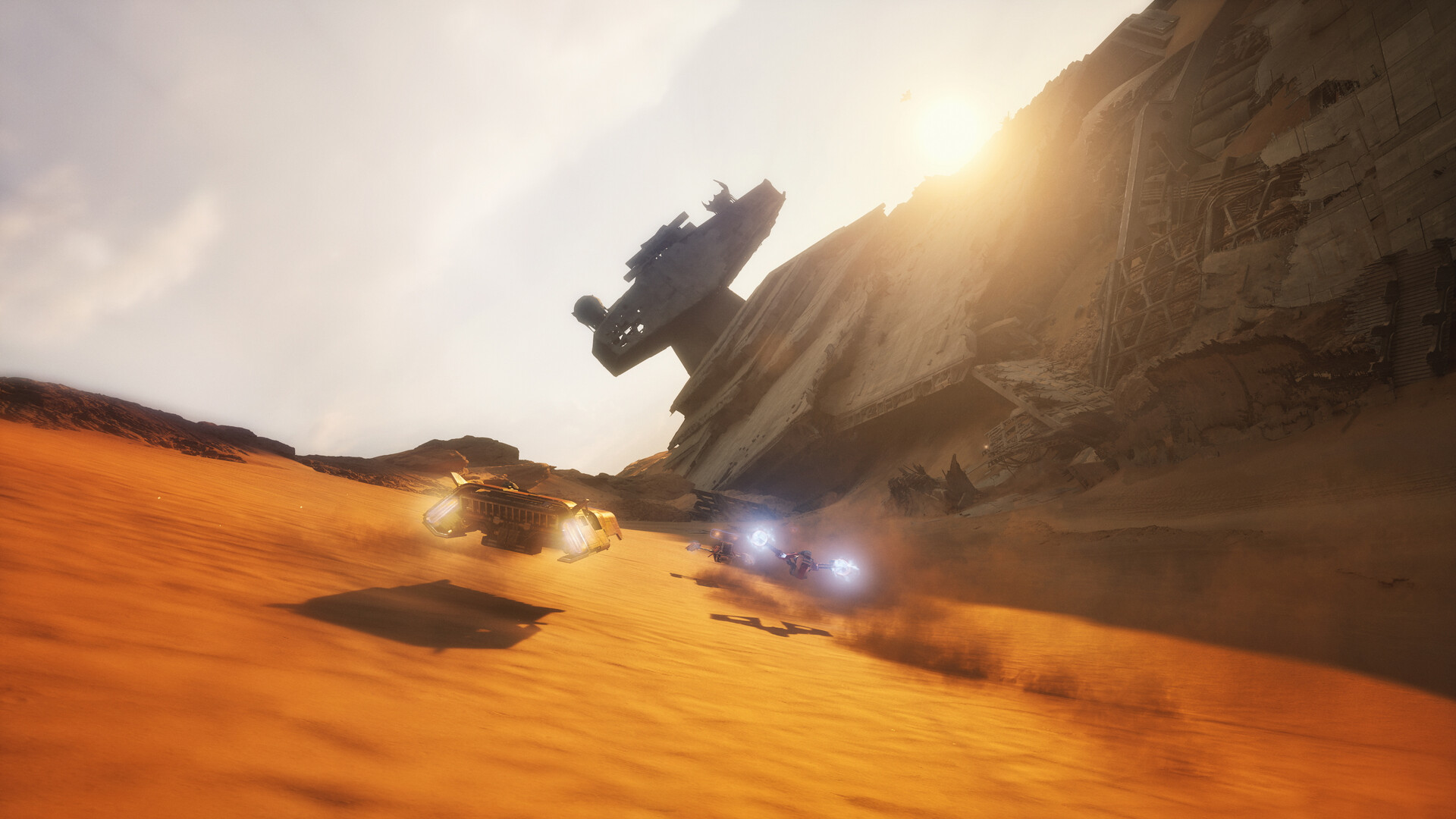
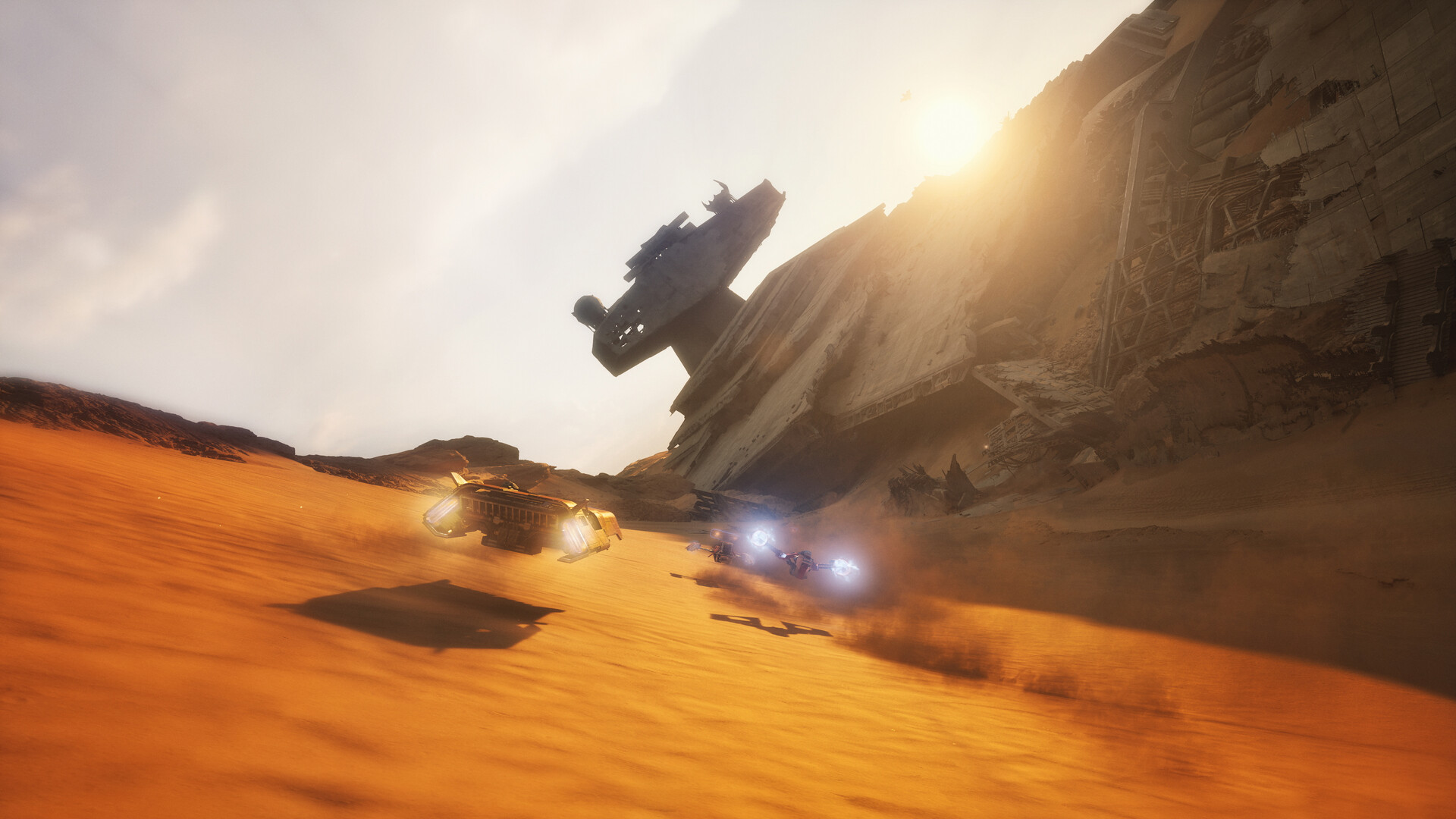
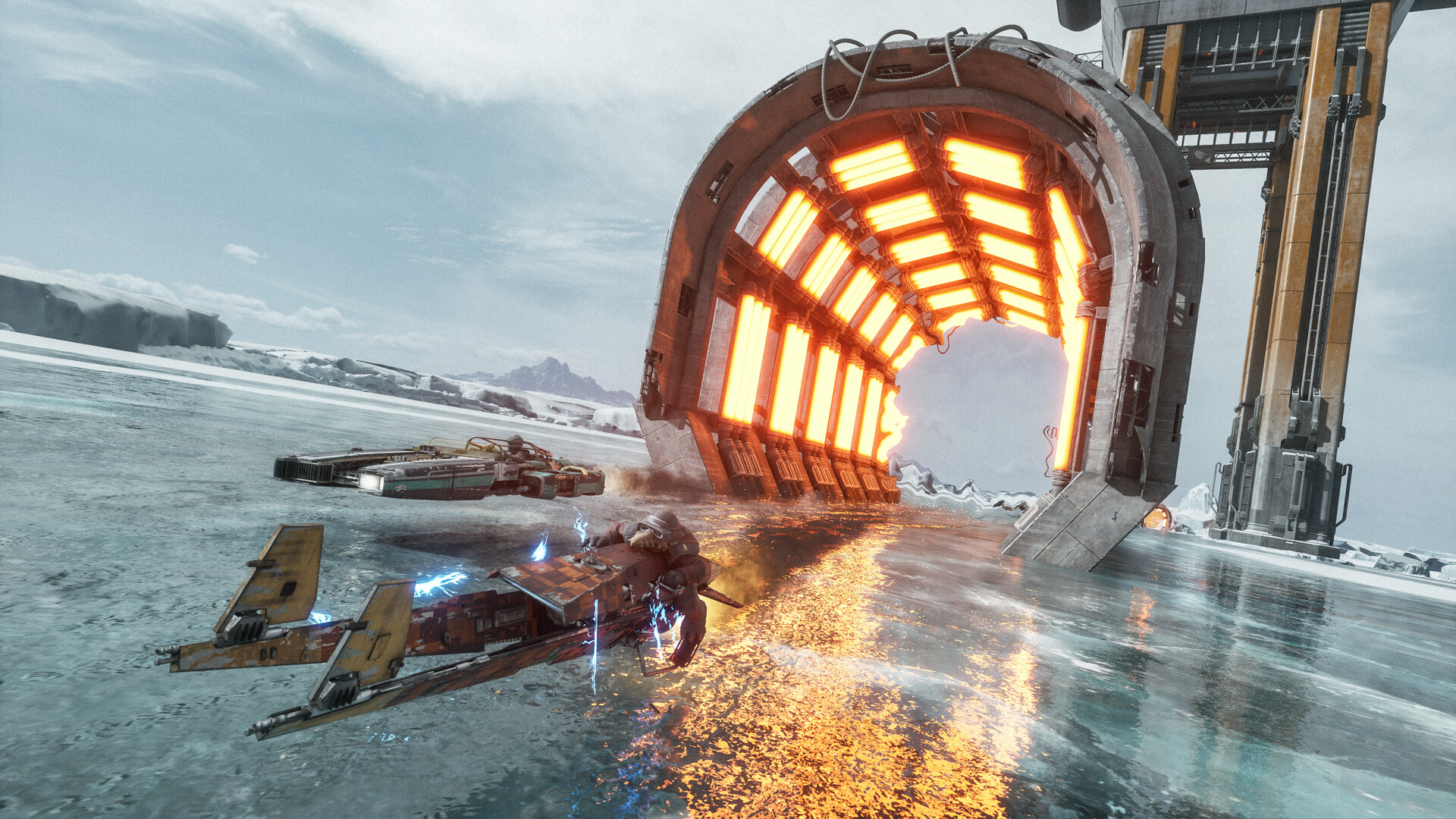
The campaign sends you across a mix of established and new locations, including Jakku, Tatooine, Ando Prime, Sentinel I, Lantaana, Derven Acos and Crait, and each environment pushes back against your overheat management in a different way. Expect scorching desert stretches where a punishing sun accelerates your overheat meter faster than normal, and colder tracks where engine-freezing temperatures work against your vehicle in the opposite direction. Learn to anticipate which hazard a given track is throwing at you before you commit to a long boost chain, because the environment alone can tip a comfortable lead into an explosion with very little warning.
It is worth scouting a new planet's first race in an arcade or practice run rather than inside a live tour event, specifically to learn its hazard profile before your crash limit and overheat meter are both on the line at once. The time cost of a practice lap is nothing compared to losing a tour to a hazard you had not seen before.
05Earning and Spending Credits
You earn credits after every event, and you spend them at shops that open between planetary transitions during a tour. Early on, put that currency into whichever vehicle class you have settled on rather than spreading it thin across all three; a focused build clears mid-tour difficulty spikes far more reliably than a generalist one that is mediocre everywhere. Galactic Racer also layers a premium currency on top of the credit economy, and that one buys permanent stat upgrades that carry into the next tour you start, so even a tour that ends badly is not a wasted run if you have been banking that meta-progression along the way.
Think of the two currencies as serving different jobs: credits are for winning the tour you are currently on, and premium upgrades are for making every future tour easier. If you are repeatedly getting knocked out at the same chapter, that is usually a sign to bank premium upgrades for a run or two rather than keep attacking the same wall with the same base stats.
06Clearing a Boss Race
Tours build toward boss races staged on derelict asteroids, and they are the hardest single test the campaign throws at you. These events combine the tightest crash tolerances in the game with hazard-heavy layouts, so arrive with a vehicle you have fully committed to upgrading rather than whatever got you through the previous chapter on luck. Treat the planetary races before a boss event as a dress rehearsal: if you cannot clear a chapter's regular races without burning through most of your crash limit, you are not ready for what is waiting on the asteroid, and it is worth farming an extra arcade run or two for credits before you walk in.
07Your First Run, Step by Step
If you want a clean path through your very first tour without wasting resources on mistakes other new pilots tend to make, work through these in order.
Your First Run, Step by Step
- 1Run the Kor Sarun Darc X or another landspeeder for your first chapters so you can learn the overheat meter without a twitchy vehicle to fight at the same time.Chapter 1
- 2Before taking a new planet into a tour race, run it once in Arcade mode or a time trial to learn its hazard profile and your crash risk without the tour on the line.5-10 min
- 3Spend shop credits on the single vehicle class you plan to race the rest of the tour with instead of splitting them across landspeeders, speeder bikes and skim speeders.Between planets
- 4In your first tour, aim to finish every race under the crash limit rather than chase first place; a clean podium keeps your run alive longer than one aggressive win.Every race
- 5Treat the races leading into a boss event as a dress rehearsal. If you are burning through most of your crash limit there, farm an extra arcade run for credits before the boss race.Before boss races
- 6If you keep losing at the same chapter, stop spending every credit and bank premium currency instead; permanent stat upgrades carry into your next tour.After a failed tour
- 7Once podracers unlock, test them in Arcade mode before bringing one into a tour; their looser handling punishes players who have not already built good braking habits.After several chapters
“We wanted to balance them all together - so being in a tiny little speeder bike and going for a shortcut, but then having a skim speeder fly around you.”Kieran Crimmins, Creative Director at Fuse Games
08Watch Before You Race
Fuse Games' official launch trailer is the clearest look at how landspeeders, skim speeders and podracers actually handle against each other in motion, and it is worth watching before your first tour if you have not already. You can read more about the game's development and setting on its Wikipedia overview, or check current platform availability and editions on the official Steam store page.
FAQ
What platforms is Star Wars: Galactic Racer available on?
Star Wars: Galactic Racer launched on October 6, 2026 for PC, PlayStation 5 and Xbox Series X|S. No Nintendo Switch 2 version has been confirmed.
Who developed Star Wars: Galactic Racer?
Fuse Games developed it, with Secret Mode publishing under license from Lucasfilm Games. Fuse Games was founded by former Criterion Games general manager Matt Webster and includes staff with Star Wars Battlefront and Need for Speed experience.
What happens if my vehicle overheats?
Pushing the afterburner too far past the overheat warning makes your vehicle explode, ending the race immediately regardless of your position, so manage boost in short bursts rather than holding it continuously.
Can I play Star Wars: Galactic Racer in multiplayer?
Yes. Alongside the single-player tour campaign, the game supports online multiplayer racing for up to twelve players, plus arcade and time-trial modes for solo play without tour-based risk.
When do podracers unlock?
Podracers become available after you clear several chapters of the campaign. They are faster than every other vehicle class but noticeably looser to handle, so they are best used once you are comfortable with the base speeder classes.
Official resources

Jonas runs the guides desk at Tutorial.Games. He replays every route, build and boss strategy on the current patch before it goes up, and re-checks it when the developer ships a balance update. Soulslikes, co-op action games and anything with a build planner.