Castlevania: Belmont's Curse: Boss, Arcana and Weapon Guide
A beginner's guide to Castlevania: Belmont's Curse covering Rose Belmont's whip combat, weapons, the Arcana system and the game's named bosses.
Castlevania is back with its first major 2D entry in years, and Castlevania: Belmont's Curse throws a new Belmont into the whip-cracking, boss-hunting formula the series built its name on. It's a full-priced, fully-produced successor to the NES and SNES era rather than a side spin-off, built by Konami with The Rogue Prince of Persia studio Evil Empire and advised by Dead Cells developer Motion Twin. If you just picked it up and aren't sure where to start, this guide walks through the core systems — whip combat, your weapon and Relic loadout, the confirmed boss lineup and the Arcana system that ties progression together — so you're not fumbling through Paris on your first night.
01Who Is Rose Belmont, and What's the Story
Belmont's Curse is set in Paris in 1499, 23 years after the events of Castlevania III: Dracula's Curse. Trevor Belmont, the hero who defeated Dracula in that game, is still around as the city burns and monsters pour out of the shadows — but it's his daughter, Rose Belmont, who picks up the legendary holy whip, the Vampire Killer, to hunt them down. Rose is quickly pulled into a deeper conspiracy beneath the city, and the game frames her as the one who has to decide whether Paris survives it.
Konami and co-developer Evil Empire (The Rogue Prince of Persia), with Dead Cells studio Motion Twin advising, built the game as an exploration-based 2D action title rather than a roguelike. If you're coming in expecting run-based structure because of Evil Empire's pedigree, don't — Konami has said directly that Belmont's Curse is not a roguelike or roguelite, and it plays like a traditional Castlevania map you explore and re-explore as you unlock new tools.
02Mastering Rose's Whip Combat
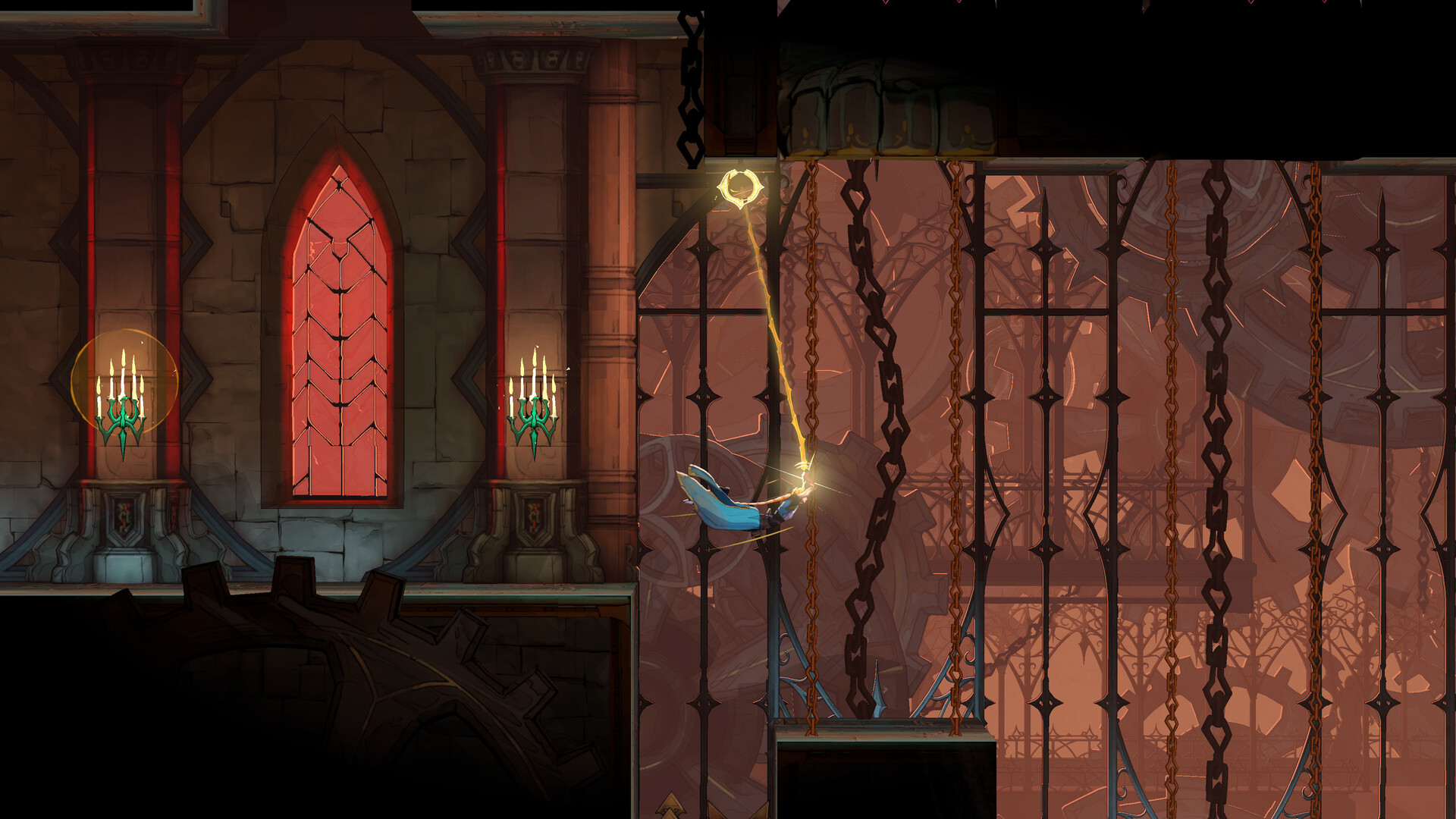
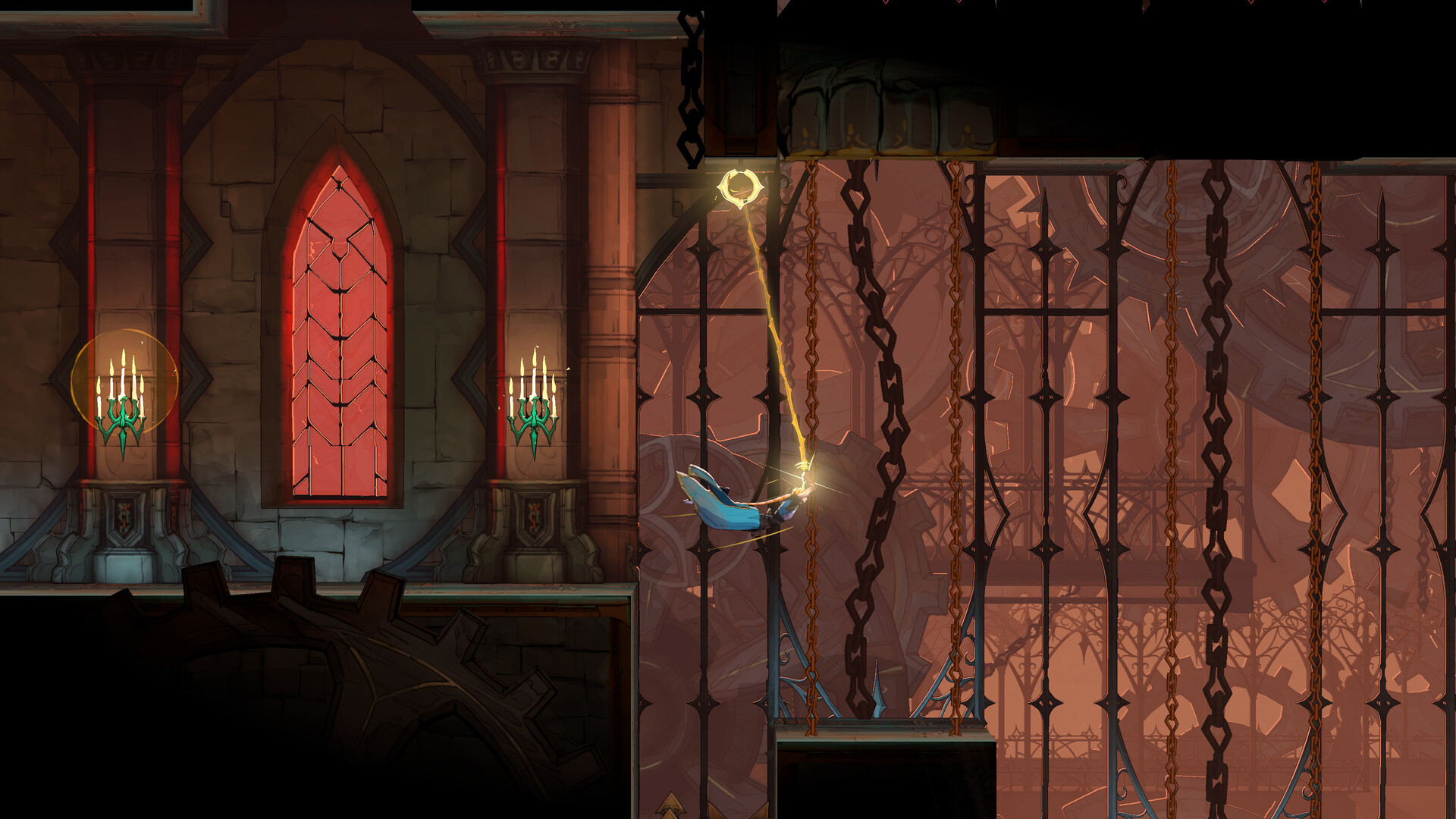
The whip is Rose's whole kit, and the game leans hard into making it feel good to use rather than just functional. You can crack the Vampire Killer at wall-mounted candles and hanging fixtures to swing across gaps like a trapeze artist, and short-range whip-pounce attacks let you close distance on enemies quickly instead of just poking at them from range. Konami's own pitch for the game calls this "satisfying whip action," and in practice it means combat rewards movement — swinging into an attack or pouncing out of one is usually a better option than standing still and trading hits.
Spend real time with this before you push into harder rooms. A lot of Belmont's Curse's level design assumes you'll use whip-swings to clear hazards rather than jump them normally, and several optional rooms and item pickups are only reachable if you're thinking about the whip as a traversal tool and not just a weapon.
Konami has also been explicit that the maps themselves mix new layouts with elements pulled from classic Castlevania titles — so if a corridor or room layout feels familiar, that's intentional set dressing rather than a coincidence. The streets of Paris, the catacombs beneath them and Dracula's castle itself are all built with that "reimagined, not rebuilt from scratch" philosophy, which is worth keeping in mind if you're hunting for secrets: classic Castlevania instincts about hidden walls and candle-lit side passages generally still apply here.

03Weapons and Relics: Building Your Loadout
Outside of the Vampire Killer itself, Rose's equipment is built around customization. Konami's official listing describes weapons spanning seven distinct categories, alongside separate Relics that trigger powerful effects through both offense and defense. You find both by exploring rather than leveling up, which means backtracking through areas you've already cleared is worth doing once you've got new movement options unlocked.
There's no single "correct" loadout here by design — the point, according to Konami, is to combine whatever equipment you discover to create your own playstyle. Early on, that mostly means picking up anything you find and testing it against regular enemies in the streets of Paris before you commit to a specific weapon-and-Relic combination heading into a boss arena.
If you picked up the Midnight Edition or grabbed Belmont's Curse during pre-order, you've also got a few cosmetic extras layered on top of the core loadout: a Trevor-style costume and a Sypha-style costume for Rose, plus a Relic called Family's Grace, with an Alucard-style costume thrown in for anyone who bought any edition before launch. None of these change how the weapon or Relic systems work mechanically, but they're worth equipping early if your copy includes them, since they don't cost you anything to use.
04The Bosses Waiting in Paris: Death, Medusa, Carmilla and Joan of Arc
Belmont's Curse brings back several of the series' signature bosses. Konami's store listing confirms you'll face off against Death, Medusa and Carmilla as legendary returning enemies, alongside enigmatic new additions like Joan of Arc. The developer frames the full roster as "diverse bosses," which suggests the named four aren't the whole list — but they're the fights Konami has put its own name behind, so treat them as the ones worth preparing for specifically.
Specific attack patterns for each fight haven't been detailed by Konami beyond the trailers, so the safest general approach is the one the whip-focused combat already teaches you: use whip-swings to reposition out of a boss's attack arc rather than trying to tank hits, and go into every arena with a full stock of sub-weapons and Relics. One detail worth knowing ahead of time — previews have noted there's a difficulty modifier and no potions to stockpile for boss fights, so lean on your equipment and movement rather than planning to out-heal a fight.

05The Arcana System, Explained
This is the game's central progression hook, and it's tied directly to the bosses above. Once you defeat a boss, it's sealed into one of Rose's tarot cards, turning it into an Arcana. Each Arcana you collect unlocks a new spell built from that boss's own powers, along with a unique special action — in some cases a traversal ability as well as a combat one.
Practically, this means boss fights in Belmont's Curse aren't just gatekeeping encounters. They're how you get new tools, and some areas of the map are built to require an Arcana-granted ability to fully explore. If you hit a dead end while backtracking through the streets of Paris or the catacombs, the answer is usually "go beat another boss," not "look harder for a hidden switch."
Early-Game Progression Checklist
- 1Before you worry about any boss, spend your first hour learning how the Vampire Killer doubles as a traversal tool. Cracking it at hanging fixtures lets Rose swing like a trapeze artist across gaps, and short whip-pounce attacks let her close distance on grounded enemies fast. Konami built the whole game's pacing around this — get comfortable whipping, swinging and pouncing before you push into tougher rooms.15 min
- 2Rose's equipment splits into the Vampire Killer whip plus seven separate weapon categories, alongside Relics that add offensive or defensive effects. Early exploration in the streets of Paris turns up your first alternate weapons and a Relic or two — grab everything you see, since mixing weapon types with Relics is how you shape your own playstyle rather than following one fixed build.30 min
- 3Your first real level is the burning streets outside Dracula's castle. Treat it as a combat tutorial: regular enemies here hit in readable patterns, so use the space to practice whip-pounce combos and get a feel for your sub-weapons before the catacombs raise the difficulty.45 min
- 4Below the streets, the catacombs tighten corridors and lean harder on verticality, which is where whip-swinging over pits really pays off. Expect denser enemy placement and the game's first serious platforming checks — take it slow and keep an eye out for side rooms, since weapon and Relic pickups are easy to miss in the dark.1 hr
- 5Castlevania: Belmont's Curse confirms a boss lineup that includes series mainstays Death, Medusa and Carmilla alongside the new face Joan of Arc. Each is a dedicated arena fight rather than a corridor ambush, so go in with a full item stock and don't be afraid to disengage and reposition — whip-swinging out of a boss's attack arc is usually safer than trading hits.20 min each
- 6Every boss you defeat is sealed into one of Rose's tarot cards, becoming an Arcana that unlocks a new spell and a unique special action tied to that boss's own power. This is the game's main progression hook — treat each boss as a key you need, not just an obstacle, since the Arcana it drops can open paths you couldn't reach before.5 min
- 7The streets and catacombs both funnel back toward the looming castle itself, where the game's gothic atmosphere and classic Castlevania room design are most concentrated. Save your strongest Relics and whatever Arcana spells you've unlocked for this stretch, since it's built to test everything you've picked up on the way in.Ongoing
06Tips for Starting Your Hunt
- Treat the streets of Paris as your tutorial. It's the first area, enemy patterns are readable, and it's the best place to get comfortable with whip-swinging before the catacombs raise the stakes.
- Don't ignore side rooms. Weapon and Relic pickups are easy to miss, especially in the catacombs, and your build options depend entirely on what you've found rather than a level-up system.
- Fight bosses for their Arcana, not just to progress. If you're stuck on where to go next, an unclaimed boss fight is more likely to be the answer than a missed secret passage.
- Use the whip to disengage, not just to attack. Swinging out of a boss's attack arc is generally safer than absorbing a hit and swinging back, especially with no potions to fall back on.
- Experiment with weapon-Relic combinations before a boss, not during one. Test new gear against regular enemies first so you're not learning a weapon's timing for the first time in a boss arena.
- Expect a harder curve than a typical modern action game. Early previews flagged a difficulty modifier and no stockpiled healing items for boss fights, so Belmont's Curse leans closer to classic Castlevania's unforgiving reputation than a lot of recent genre entries.
Castlevania: Belmont's Curse launched on October 15, 2026 for PC, PlayStation 5 and Xbox Series X|S, with a Nintendo Switch version following. Whether you're returning for the first new mainline-style Castlevania in years or jumping in fresh, the whip-first combat and boss-driven Arcana system are the two things worth understanding before anything else — everything else in Rose's hunt through Paris builds on them.
FAQ
Who is Rose Belmont?
Rose Belmont is the protagonist of Castlevania: Belmont's Curse, the daughter of series hero Trevor Belmont. The story is set in Paris in 1499, 23 years after the events of Castlevania III: Dracula's Curse, with Rose picking up the Vampire Killer whip to hunt the monsters flooding the city.
What bosses are confirmed in Castlevania: Belmont's Curse?
Konami's own store listing confirms Death, Medusa and Carmilla as legendary returning bosses, plus Joan of Arc as a new addition. The game is described as having a broader lineup of 'diverse bosses' beyond these named fights.
What is the Arcana system?
Arcana are tarot cards Rose gains by defeating bosses. Each sealed boss becomes a usable Arcana that grants a spell and a unique special action drawn from that boss's own powers, making boss fights a core part of how you unlock new abilities rather than just a difficulty gate.
How many weapon types does Rose have access to?
Beyond the Vampire Killer whip itself, Konami's official listing describes weapons spanning seven distinct categories, plus separate Relics that add offensive or defensive effects. Mixing these is the game's main build-customization system.
Is Castlevania: Belmont's Curse a roguelike?
No. Konami has stated publicly that Belmont's Curse is not a roguelike or roguelite, despite co-developer Evil Empire's background on Dead Cells. It's structured as a traditional exploration-based 2D action game.
Official resources

Jonas runs the guides desk at Tutorial.Games. He replays every route, build and boss strategy on the current patch before it goes up, and re-checks it when the developer ships a balance update. Soulslikes, co-op action games and anything with a build planner.