Tales of Eternia Remastered: Beginner's Guide and Settings
Tales of Eternia Remastered is out now. Here's every difficulty, Boost, and battle setting worth checking before you start your journey through Eternia.
Tales of Eternia Remastered is out now on PC, PlayStation 5, PlayStation 4, Xbox Series X|S, Nintendo Switch and Nintendo Switch 2, and the menus throw a lot at you before you ever reach Rasheans. TOSE's remaster of the 2001 PlayStation classic keeps the original Linear Motion Battle System underneath a reworked coat of paint, but it bundles in enough new toggles, difficulty tiers and quality-of-life options that it's worth stopping on the title screen before you commit to a save file. None of these decisions are permanent exactly, but getting your difficulty and your automation settings right from the first save avoids having to relearn the opening hours twice. Here's what to set, what each option actually does, and how the battle system and starting party work once you're in.
01Pick Extreme Now, Because Unknown Isn't an Option Yet
Bandai Namco confirmed the remaster ships with an Extreme difficulty available right from the opening save, alongside the more familiar lower tiers. A harder Unknown difficulty exists above it, but it only unlocks after you finish the story once, so don't go looking for it in the options menu on a fresh file. If you've played a Tales game before and want the toughest legitimate challenge on your first run, Extreme is the one to pick. Bandai Namco hasn't published exactly how Extreme's damage and encounter modifiers compare to the lower settings, so treat any specific numbers you see online as unconfirmed until the community finishes testing the retail build.
Unknown being locked behind a full clear is worth planning around if you're the type who replays JRPGs immediately after the credits roll. Pick Extreme on your first file, finish the story, and your second run is where you get the version of this battle system that's actually built to punish a party that already knows every Arte and Craymel spell in the game. There's no indication so far that your difficulty choice affects which ending or story content you see — it's a combat-only setting, not a narrative branch.
02Lock In Graphics Mode, SFX Mode and Boost Before the Intro Ends
The remaster's headline feature is a toggle between a remastered Graphics Mode and SFX Mode and settings that recreate the original 2001 presentation, so you can switch the visuals and sound back to the PS1-era original at any time if the new character portraits and effects aren't what you came for. Next to it sits Boost, which adjusts how much experience you earn and how often random encounters trigger. If you're replaying the story and mainly want to see the new content, pushing Boost toward fewer encounters keeps you moving; if you want the full grind of the original release, leave it at its default.
Both toggles are accessible from the pause menu, not just the title screen, so you're not locked into whatever you picked during the intro. That matters because the two presentation modes genuinely look and sound different rather than just swapping a filter — the Graphics Mode redraws character models and effects, while the original-style setting is closer to how the game looked and sounded on PlayStation in 2001. If you're not sure which you prefer, play the opening village in both before you decide; it's a two-minute comparison that saves you from replaying the same scene later.
03What to Expect From Performance on Your Platform
Bandai Namco's official Japanese site lists resolution and frame-rate targets for every platform, and they're described explicitly as targets rather than guarantees for the shipped game. PS5 and Xbox Series X are both targeting 4K at up to 60fps, Xbox Series S is targeting 1440p at up to 60fps, and PS4 is targeting 1080p at up to 60fps. On Steam, PC can scale up to 4K depending on your monitor, also at up to 60fps. Nintendo's hardware splits the difference: Switch 2 is targeting 4K when docked and 1080p in handheld mode, while the original Switch is targeting 1080p docked and 720p handheld, both still aiming for up to 60fps. If your save data matters to you, know that performance mode and resolution aren't retroactive the way some remasters handle it — there's no confirmed mid-game toggle beyond the Graphics/SFX Mode switch, so pick your platform with your TV or handheld setup in mind rather than assuming you can patch your way to a different target later.
04Decide How Much the Game Should Automate For You
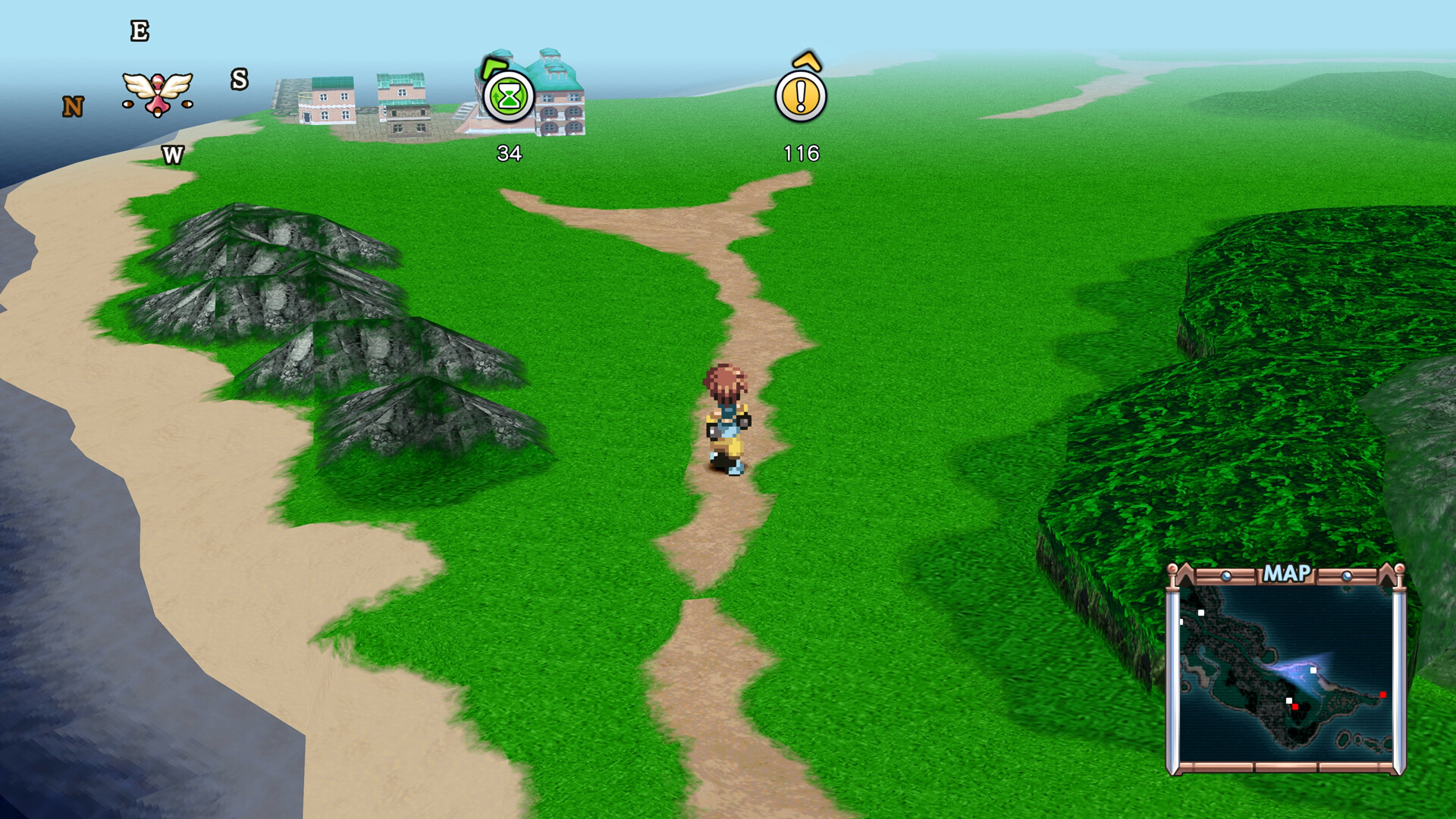
A cluster of quality-of-life settings sits next to Boost, and none of them were in the 2001 original. Destination icons can be toggled on to mark where you need to go next, which matters a lot in a game old enough that its town layouts don't hold your hand. High-speed Auto-mode speeds up combat while the AI handles your allies, useful for grinding or getting through an easy encounter you've already cleared. Battle Retry lets you restart a lost fight from its start instead of reloading a save, and Quick Recovery gets you back on your feet faster after a knockdown. None of these change your difficulty tier, so you can lean on them as hard as you want on Extreme without it affecting your Unknown-difficulty unlock later.
The option to disable enemy encounters outright is the one most worth knowing about if you remember the original game's random-encounter rate being aggressive. You don't have to run it on at all times — toggling it on while you backtrack through an already-cleared area and off again before a dungeon you haven't finished mapping is a reasonable way to use it without missing experience you'll actually need.
05How the Aggressive Linear Motion Battle System Plays
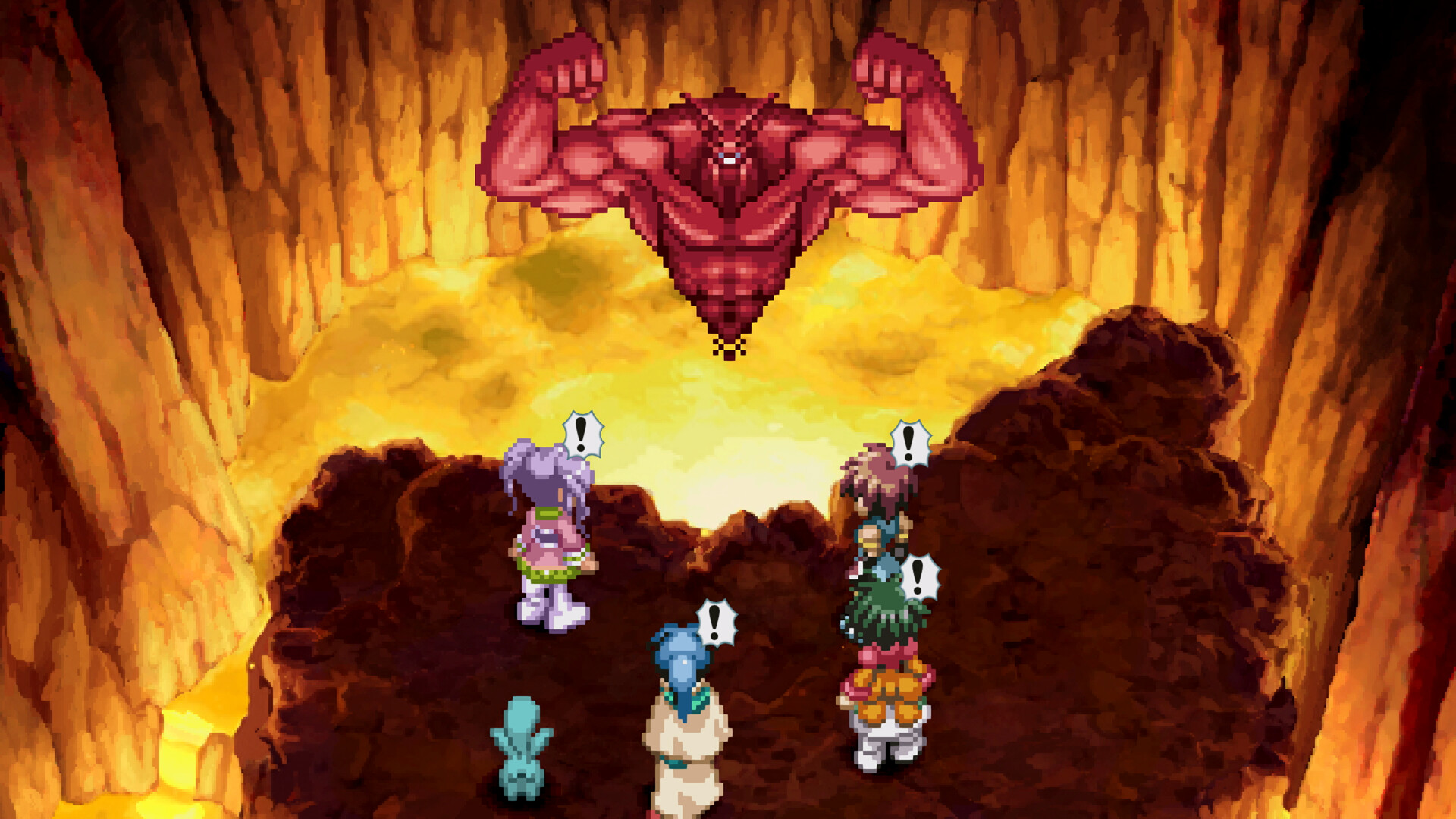
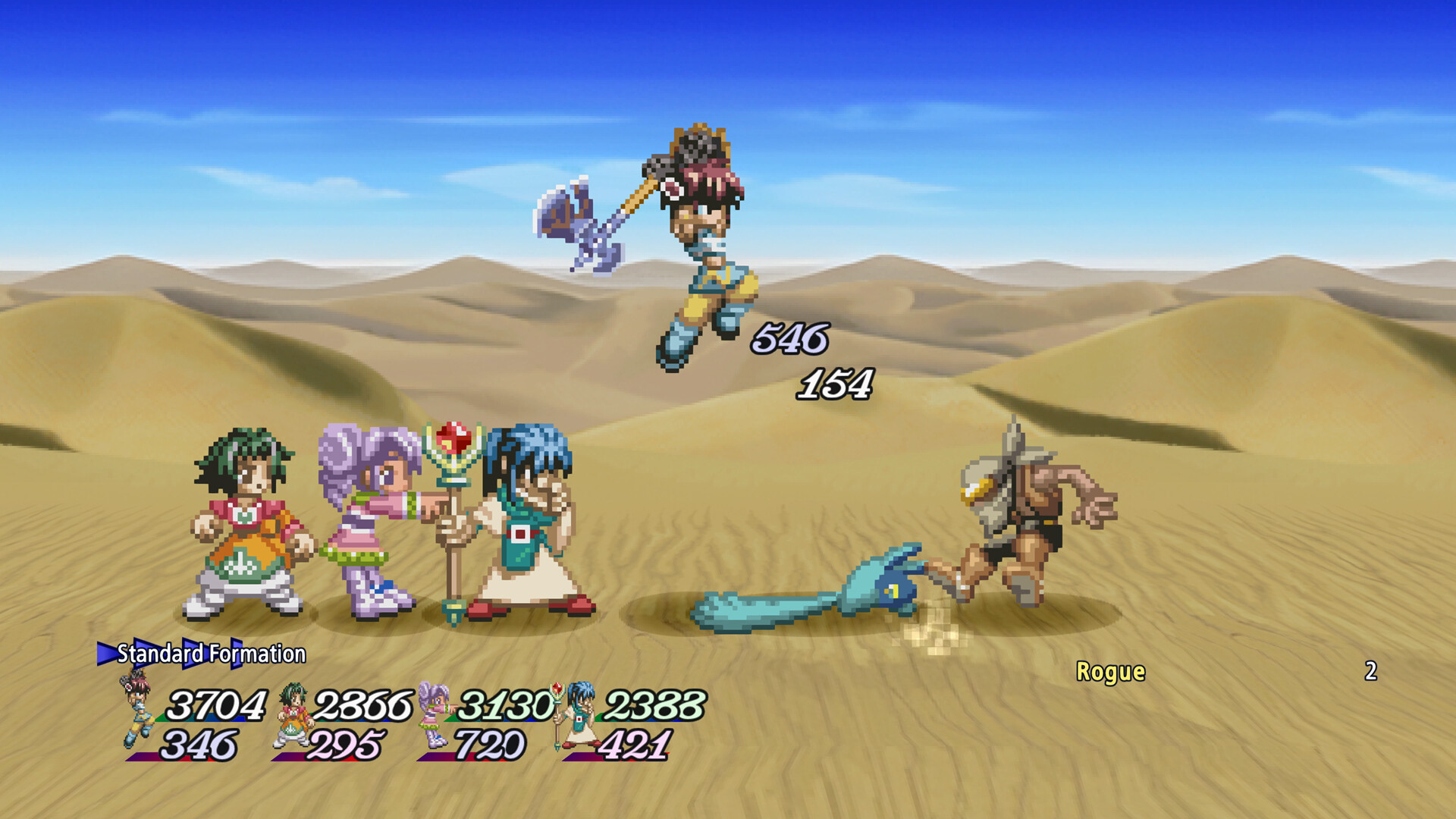
Combat runs in real time on a 2D plane, closer to a fighting game than a turn-based menu. You directly control one party member — Reid Hershel by default — while the other three act on AI rules you set before and during the fight, and you can swap who you're controlling mid-battle if you need a specific Arte or a Craymel spell to land. Reid fights with a hunter's weapon and his own "Fibril" ability, Farah Oersted closes distance fast with hand-to-hand combination attacks, and Keele Zeibel and Meredy both fight as Craymal Mages, drawing on the power of the Greater Craymels — the elemental spirits central to the story — rather than melee weapons. Chaining Artes into combos and timing character swaps around enemy openings is the entire skill ceiling here, so don't sleep on practicing it in the game's earliest, lowest-stakes fights.
You can also pause mid-battle to open the full menu, check item and spell charges, or adjust your AI-controlled allies' behavior without the fight continuing around you, which is worth doing the first few times you see an unfamiliar enemy formation rather than guessing. The AI settings you set for your benched party members carry over between fights until you change them again, so it's worth a minute early on to set up an approach you're comfortable leaving on autopilot — aggressive for your attackers, conservative with healing items for whoever's covering support.

06Your Starting Party Covers Every Role
You begin in the Inferian village of Rasheans as Reid, who teams up with childhood friend Farah almost immediately after a mysterious girl named Meredy arrives speaking a language nobody understands. The early hours exist to establish why the "Great Fall" — a collision between Eternia's two divided worlds, Inferia and Celestia — threatens both Reid and Meredy's homes, and the party composition during this stretch is built to teach you the basics: a frontline fighter in Reid, a second physical attacker in Farah, and Meredy as your first real taste of Craymel-based magic. Treat every early fight as a tutorial for how your specific party handles enemy formations, because the game doesn't repeat these lessons once Keele and the rest of the cast join later.
Keele Zeibel joins as the party's other Craymal Mage once the story reaches Celestia, and later arrivals like Chat, Max and the swordsman Rassius "Ras" Luine round out a roster built around swapping specialists in and out depending on what a fight calls for rather than sticking with a fixed four. None of this changes how you should treat the Rasheans opening, though — it's still the section of the game teaching you the controls, and rushing through it without learning how Reid, Farah and Meredy cover each other just means relearning the same lessons later with a bigger, harder-to-manage roster.
Settings to Lock In Before Your First Save
- 1Extreme is open from the first save; Unknown stays locked until you've finished the story once, so choose Extreme now if you want the toughest available difficulty on this run.1 min
- 2Toggle between the remastered visuals/audio and the original 2001-style presentation from the options menu — you can swap back any time from the pause menu, not just here.1 min
- 3Boost adjusts experience gained and how often random encounters trigger. Lower encounters if you're focused on the story, leave it default for the original pacing.1 min
- 4Destination icons mark where to go next — useful since the game's town layouts predate modern quest markers.30 sec
- 5High-speed Auto-mode speeds up combat while the AI runs your allies — good for grinding or encounters you've already mastered.30 sec
- 6Battle Retry restarts a lost fight instantly instead of reloading a save, and Quick Recovery gets you up faster after a knockdown — both are worth knowing about before your first boss.1 min
07Check the Recipes Menu Before You Need It
Outside of combat you can cook using recipes you pick up as you travel, turning ingredients into food that restores HP or buffs your stats before a tough fight — a cheaper alternative to burning healing items or spell charges on trash encounters. It's easy to ignore this menu entirely in the opening hours because nothing forces you into it, but recipes you learn early are usually the ones that save you money across the whole game, so check the menu after every town instead of waiting until you're already struggling.
08What Actually Changed Since the 2001 Original
Strip away the new menus and Tales of Eternia Remastered is still the same Linear Motion Battle System game that introduced Reid, Farah, Keele and Meredy on the original PlayStation, with the "Great Fall" plot and the hybrid fighting-game-meets-RPG combat intact. What TOSE added is almost entirely about control and accessibility: the Graphics/SFX toggle, Boost, destination icons, Battle Retry, Quick Recovery and the Extreme/Unknown difficulty structure are new layers over the original systems rather than replacements for them. If you remember the game being unforgiving about backtracking and blind encounters, that's still true on anything but the lightest Boost setting — the remaster just gives you the option to soften it instead of forcing it on you.
FAQ
Is Tales of Eternia Remastered a remake or just a port?
It's a remaster built by TOSE on top of the 2001 PlayStation original, with reworked visuals and audio you can toggle back to the original presentation, plus new quality-of-life and difficulty options layered over the same story and battle system.
What platforms is it on?
PC via Steam, PlayStation 5, PlayStation 4, Xbox Series X|S, Nintendo Switch and Nintendo Switch 2, all released the same week.
When does the Unknown difficulty unlock?
After you complete the story once. Extreme is the hardest option available on a first playthrough.
Do I need to have played the original Tales of Eternia or other Tales games first?
No — the remaster tells a self-contained story about Reid, Farah and Meredy's journey between Inferia and Celestia, and doesn't assume familiarity with other entries in the series.
Can I switch between the remastered and original graphics later?
Yes. Graphics Mode and SFX Mode are accessible from the pause menu throughout the game, not just at the start.
Official resources

Jonas runs the guides desk at Tutorial.Games. He replays every route, build and boss strategy on the current patch before it goes up, and re-checks it when the developer ships a balance update. Soulslikes, co-op action games and anything with a build planner.