One Piece: Grand Gourmet Guide: Cooking, Menus and Decor Tips
One Piece: Grand Gourmet just launched. Here's how cooking, menus, decor and crew expeditions work in Kairosoft's new Straw Hat restaurant sim.
ONE PIECE: Grand Gourmet launched on October 22-23, 2026, dropping you into the kitchen of Baratie Number 2 as a brand-new staff member working for Sanji and the Straw Hat Crew. It is a restaurant management sim built by Kairosoft, the studio behind dozens of bite-sized tycoon games, reskinned with full One Piece licensing. If you are jumping in on launch week, here is how the cooking, menu and decoration systems actually fit together, and what to prioritize before you start spending your starting Berries.
01What Kind of Game Grand Gourmet Actually Is
Grand Gourmet is not an action game or a visual novel; it is a management sim in the same lineage as Kairosoft's other restaurant and theme-park titles, just filtered through One Piece's cast and locations. You take over the second location of the Baratie, the floating restaurant ship from the original series, and grow it from a small operation into "the greatest restaurant of the seas," as Bandai Namco's own official game page puts it. Expect short daily cycles: serve customers, bank Berries, spend them on new ingredients, recipes and furniture, then repeat with a slightly bigger restaurant.
The game is available on PC via Steam, Nintendo Switch, Nintendo Switch 2, iOS and Android for $19.99, confirmed directly on the Steam store page. There's no cross-save confirmed between platforms yet, so pick the version you'll actually keep playing on.
02Cooking With Sanji: Ingredients, Recipes and Devil Fruit Dishes
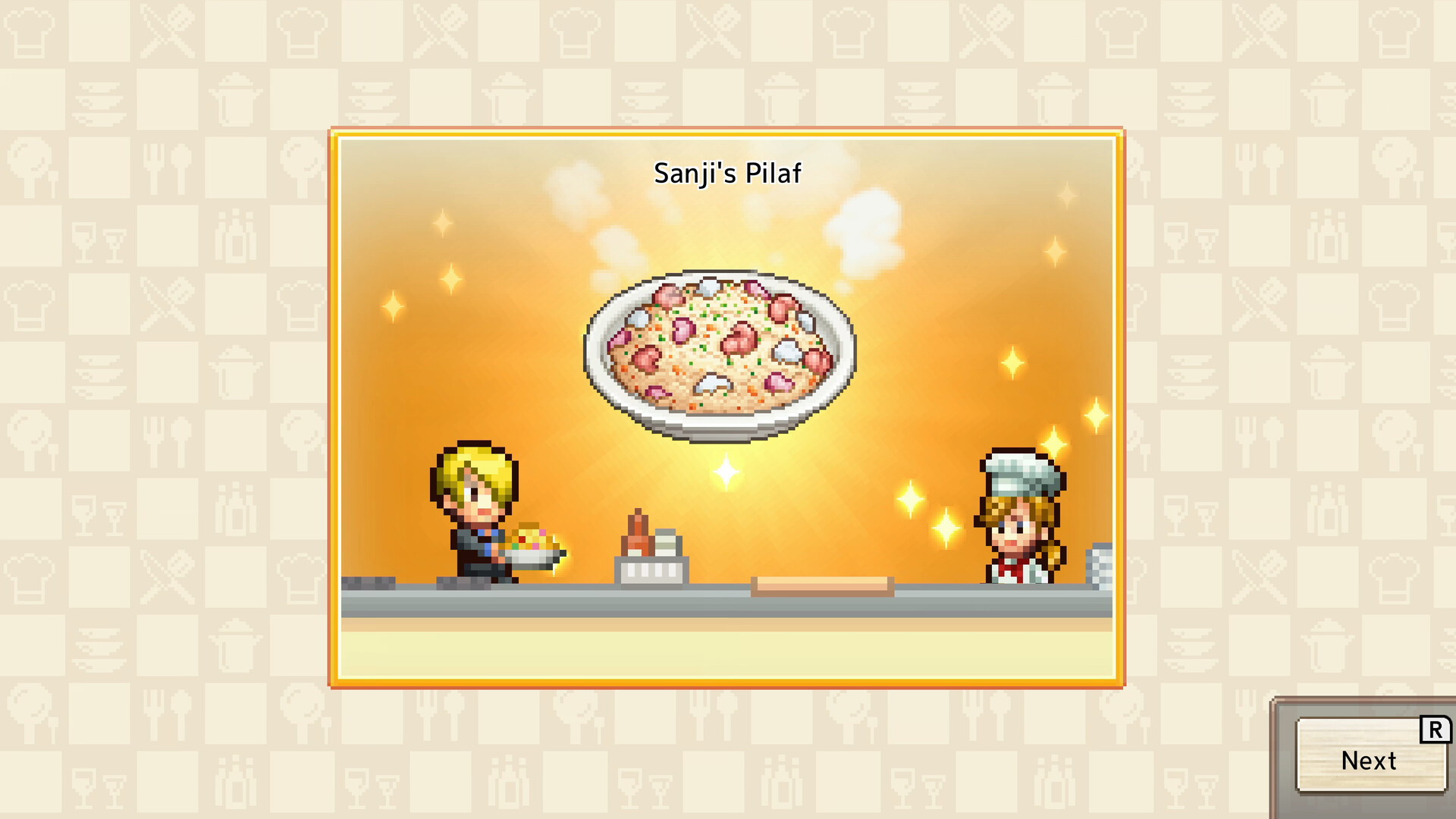
Every dish starts with ingredients. Early on you're handed a short list by the game's tutorial and by character requests; later, ingredients come from expeditions (more on that below) and from purchases as your reputation grows. Once you have what a recipe calls for, Sanji walks you through actually cooking it, turning raw ingredients into named series dishes.
The recipe pool leans hard on existing One Piece food references rather than generic sim fare: confirmed examples from Bandai Namco's own materials include Water-Water Meat BBQ and Sea King Penne Gorgonzola, alongside a separate category of Devil Fruit dishes, recipes themed around the powers of specific Devil Fruits from the series. New recipes keep unlocking as your restaurant grows, so don't panic if your starting menu looks thin after day one.
03Turning Dishes Into Menus Customers Will Actually Order
Cooking a dish isn't the end of the loop. You then plate it, choose from available decoration and presentation options, and slot finished dishes into meal sets, mains, side dishes, desserts and drinks grouped into a single order a customer can pick. Each component in a set shows its own price and contribution, so a stronger side dish or drink can meaningfully boost what a table pays without you having to invent a new recipe from scratch. Garnishes and flourishes layer on top of a finished dish for extra presentation value, which is also how the game nudges you to revisit older recipes instead of only chasing newly unlocked ones.
This is also where the game's One Piece references stay consistent: the sets you build pull from named crew-aligned dishes and drinks, not abstract "burger" or "soup" placeholders, so experimenting with set combinations doubles as flipping through the cast's food habits.
04Decorating Baratie Number 2 and Earning Regulars
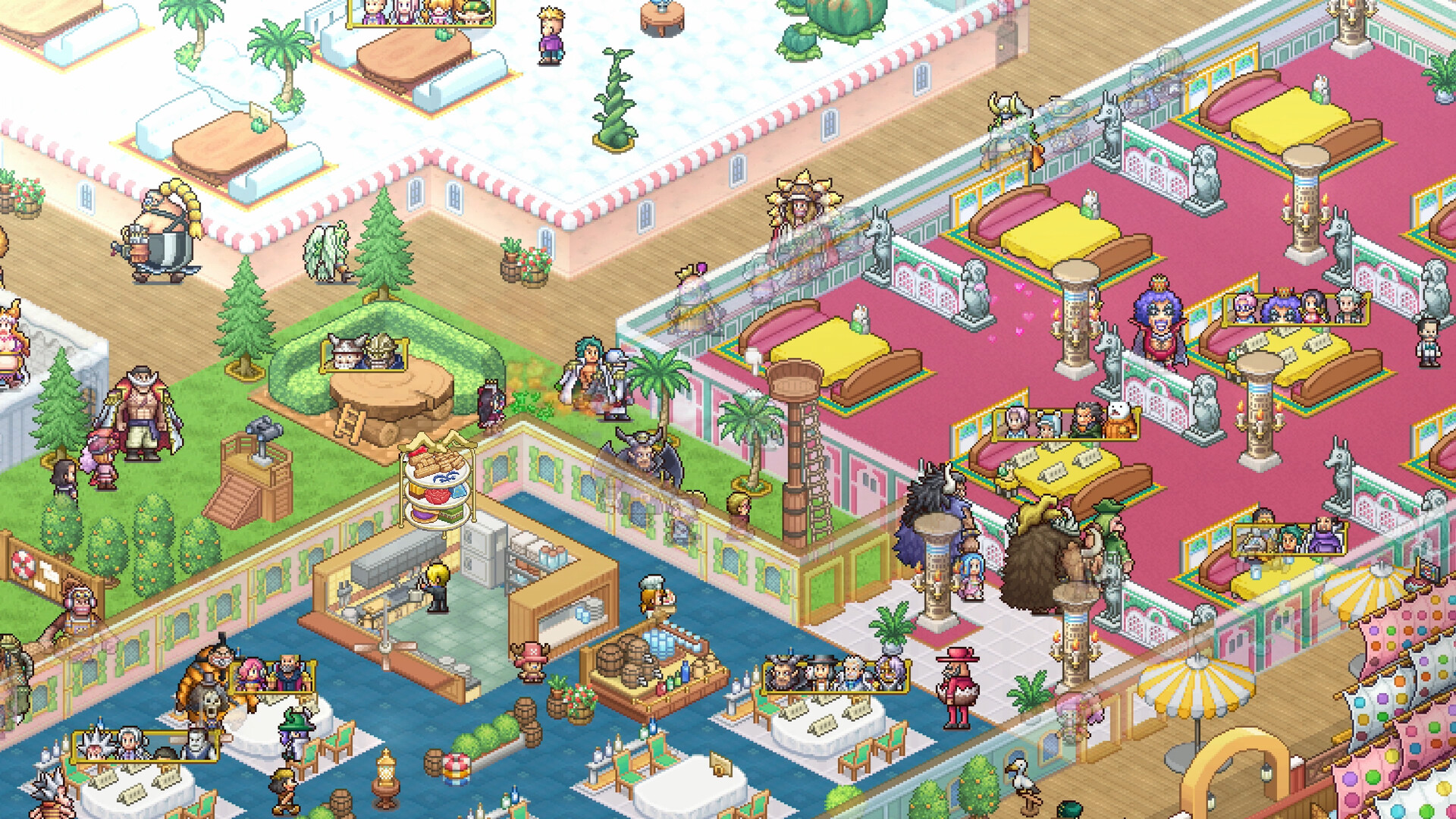
Bandai Namco's own numbers put the decoration pool at over 200 furniture, building and decorative items, split across themed sets inspired by locations from later in the One Piece story, including Whole Cake Island and Egghead. Placing themed furniture isn't just cosmetic: according to the publisher, a restaurant styled around a character's tastes can turn that character into a loyal regular rather than a one-time visitor. If you're aiming to unlock specific character events, matching the surrounding decor to that character's associated arc is worth trying before you assume an event is locked behind a stat instead.
With more than 400 One Piece characters appearing as staff, customers or cameo diners, in pixel art for the first time according to the developer, decoration choices end up doubling as a soft filter for who shows up at your restaurant on a given day. Regulars specifically come from repeated visits where a character's tastes line up with what you're serving and how the dining room is decorated, so if a recipe or decor set seems to be attracting the same faces back, that's worth building around rather than replacing. Over time this turns the restaurant floor into a soft roster-building exercise: who keeps coming back tells you almost as much about what to cook next as the recipe list itself does.
05Sending the Crew on Ingredient Expeditions
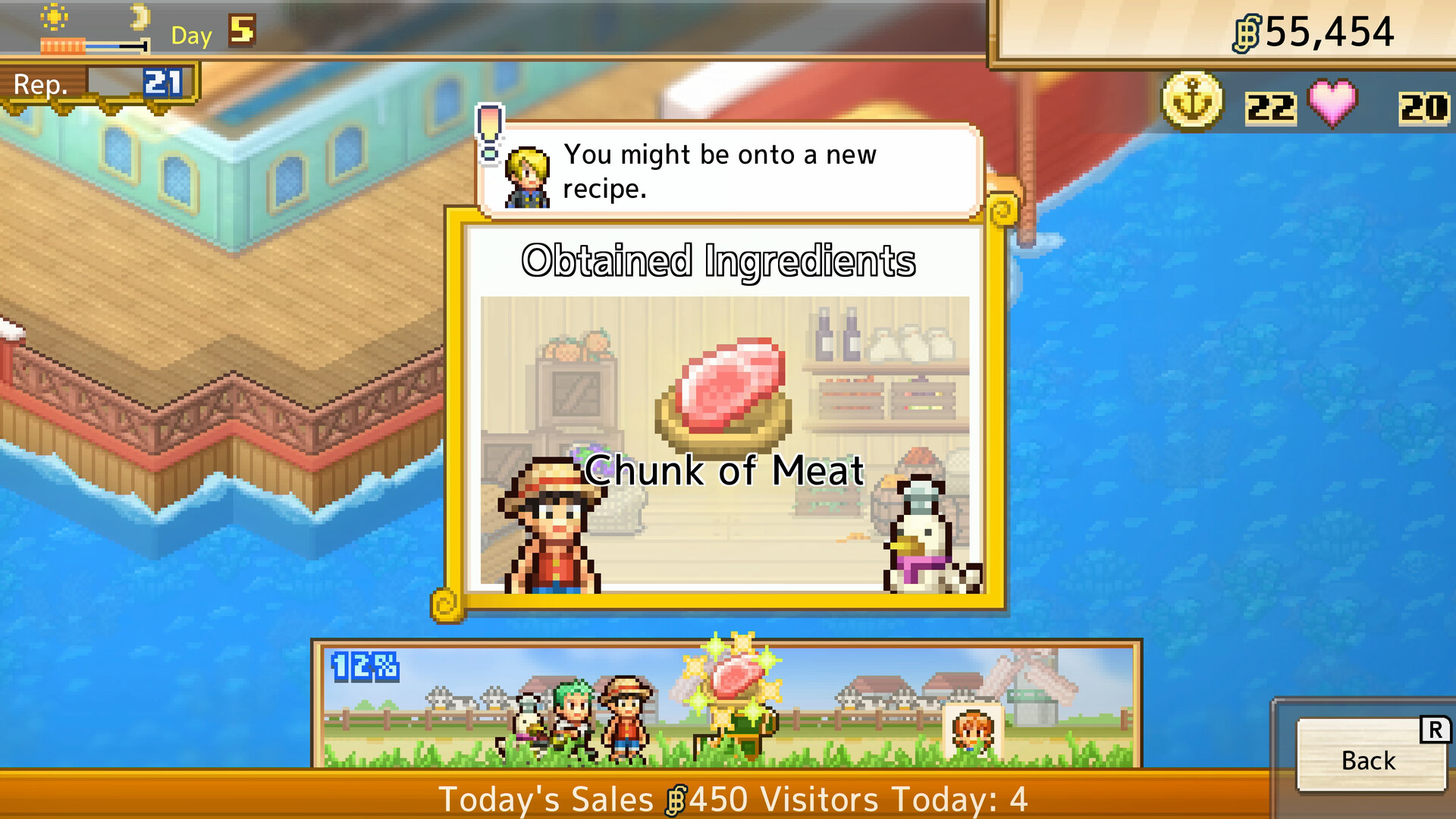
Beyond what you can buy outright, Baratie Number 2's roster can be sent out to gather ingredients directly, returning with items tied to specific recipes rather than generic stock. Screenshots from the opening hours show Luffy, Zoro and the rest of the crew coming back from a trip with a labeled "Chunk of Meat," which then feeds straight back into Sanji's recipe list rather than sitting in a generic materials tab. This is the main way to get your hands on rarer, story-flavored ingredients early, and it runs in parallel with service, so queuing an expedition before a busy day rather than mid-shift is the more efficient habit to build. Exact stamina costs and trip lengths aren't detailed in the publisher's own materials, so treat any specific numbers you see elsewhere as unconfirmed until you've tested them yourself in the current build.
Reputation isn't just a vanity stat either. A growing Rep. counter tracks alongside your daily Berries total and visitor count, and it's what unlocks access to pricier ingredients, new furniture categories and, eventually, the characters willing to work your floor as staff rather than just eat at it. Because reputation climbs from serving happy tables rather than from a single big sale, consistency matters more than chasing one perfect dish early on. A modest menu you can reliably plate for every table that sits down will out-earn an ambitious recipe you can only make once a day because you're short on ingredients.
Your First Hour at Baratie Number 2
- 1Gather whatever ingredients the opening prompts ask for before you start experimenting with your own recipe ideas. These early requests exist to walk you through cooking, plating and serving once each.5 min
- 2Hand your ingredients to Sanji to turn them into a finished dish. Early recipes like Sanji's Pilaf only need a couple of ingredients, so this step moves fast.2 min
- 3Choose a plating option and any available garnishes before serving. These add presentation value on top of the base recipe without requiring new ingredients.2 min
- 4Slot your cooked dish into a set alongside a side, dessert and drink. Each slot shows its own price, so fill cheaper slots with whatever you already have rather than leaving them empty.3 min
- 5Open for service and keep an eye on which sets sell fastest. Early Berries income should go straight back into one new ingredient or recipe rather than being split across several.5 min
- 6Queue an available crew member for an expedition once service is running smoothly. This brings back recipe-specific ingredients you can't simply buy from the counter.5 min
06Early Tips Before You Overspend
- Don't spread your starting Berries thin. A handful of well-chosen ingredients and one solid recipe upgrade will do more for early income than scattering cash across every available purchase.
- Keep tables close to the kitchen pickup point. Service speed matters for keeping a dining room full, and shorter paths between cooking and seating reduce the chance customers leave before being served.
- Match decor themes to the characters you want. If you're chasing a specific regular, build out the themed set tied to their part of the story before you assume you need a higher-tier recipe.
- Check Sanji's dialogue prompts. New recipe hints and ingredient requests are often flagged directly through character dialogue rather than buried in a menu.
07Should You Buy Grand Gourmet at Launch
If you've played any other Kairosoft management sim, the pitch here is straightforward: the core loop of cook, plate, decorate, repeat is the studio's well-worn formula, with One Piece's cast and locations layered on top instead of a generic theme. Early coverage has noted that the opening hours lean on tutorial prompts more than free experimentation, so don't expect a wide-open sandbox in your first session or two. For series fans specifically, the density of named dishes, over 400 characters and arc-specific decor sets is the real draw; for players who don't care about the license, it's worth weighing against Kairosoft's other restaurant and tycoon titles first.
The game's entry on Wikipedia and its listing on the Nintendo eShop both confirm the same October 2026 window across Switch, Switch 2, PC and mobile, so there's no platform-exclusive content to wait out before deciding where to buy.
08What to Expect in Your First Week
Because Grand Gourmet runs on short day cycles rather than long open sessions, progress shows up in small, frequent unlocks instead of one big mid-game spike. Expect your first week to be mostly about stabilizing a menu you can serve without running out of ingredients, rather than chasing every new recipe the moment it appears. Once a handful of dishes are reliable, reinvest surplus Berries into one themed decor set at a time instead of spreading purchases across every category Baratie Number 2 offers. That slower, deliberate pacing is also closer to how Kairosoft's other management sims reward players, so veterans of the studio's catalog should feel at home faster than newcomers expecting a faster-paced cooking game.
If a specific character or event seems locked no matter what you cook, double-check the associated decor theme before assuming it's tied to a recipe tier; the publisher's own description of the regulars system ties character interest to restaurant presentation as much as to menu quality, which is easy to miss if you're focused purely on recipes.
FAQ
When did One Piece: Grand Gourmet release, and on which platforms?
The Steam version released October 22, 2026, with Bandai Namco's own press materials listing October 23 for the wider rollout across Nintendo Switch, Nintendo Switch 2, iOS and Android. Exact timing can vary slightly by region and storefront.
How much does One Piece: Grand Gourmet cost?
It's priced at $19.99 on Steam, confirmed directly on the game's Steam store page, with the Nintendo eShop listing the same price for the Switch versions.
Who developed One Piece: Grand Gourmet?
Kairosoft developed the game, with Bandai Namco Entertainment publishing it under the One Piece license. It uses Kairosoft's established management-sim formula rather than a new engine or genre for the studio.
Are Devil Fruit dishes different from regular recipes?
Yes. Bandai Namco's own description separates Devil Fruit dishes out as recipes themed around specific Devil Fruit powers from the series, distinct from standard dishes like Water-Water Meat BBQ or Sea King Penne Gorgonzola.
Does restaurant decoration actually affect which characters visit?
According to the publisher, yes: decor sets themed around locations like Whole Cake Island or Egghead are tied to attracting specific characters and turning them into loyal regulars, not just changing the restaurant's appearance.
Official resources

Jonas runs the guides desk at Tutorial.Games. He replays every route, build and boss strategy on the current patch before it goes up, and re-checks it when the developer ships a balance update. Soulslikes, co-op action games and anything with a build planner.